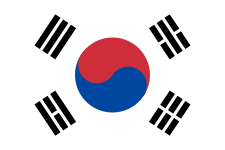

The Origins of the Taegeukgi
The Taegeukgi serves as the national flag of South Korea, officially adopted in 1882. It was established during the reign of King Gojong as diplomatic relations were being formalised, and its design reflects East Asian philosophy and culture. The Taegeuk symbol and the four trigrams represent the harmony of yin and yang and the principles of nature. Each element of the Taegeukgi carries significant meaning:
- Taegeuk Symbol: Represents the principles of the universe and nature, symbolising harmony between yin and yang.
- Four Trigrams: Each trigram represents heaven, earth, water, and fire, emphasising overall harmony and balance.
The Design of the Taegeukgi
The design of the Taegeukgi is deeply symbolic. The Taegeuk symbol is divided into white and red, representing the dualities of yin and yang. This symbol is primarily arranged in an S-shape, signifying the continuous cycle of the universe and life. The background of the Taegeukgi is white, symbolising peace and purity. In this way, the Taegeukgi effectively represents the identity and values of South Korea.
The Taegeukgi in Modern Times
The Taegeukgi is a symbol of national pride for South Koreans and is frequently seen at international events and sports competitions. For instance, at the 2022 FIFA World Cup, the Taegeukgi was waved by numerous fans in support of South Korea. This sight transcends the mere display of a flag; it serves as a powerful representation of national unity and pride.
Cultural Significance of the Taegeukgi
Beyond being a national symbol, the Taegeukgi embodies the identity and cultural heritage of Koreans. It is often used in traditional ceremonies and events. On significant occasions like Independence Day and national holidays, the Taegeukgi is raised to honour the unity of the nation.
Fan Reactions and Outlook
South Korean football fans hold the Taegeukgi in high regard. They often wave the flag during matches to cheer on their players. This act not only motivates players but also, the sight of the Taegeukgi fluttering in the stadium is always moving.
- Key Meanings of the Taegeukgi:
- Symbolises defence and sovereignty
- Represents national unity and cohesion
- Encapsulates the identity of Korean culture
What this means for South Korea
The Taegeukgi stands as more than just a national flag for Koreans; it embodies history and culture. Many fans identify with the flag, reaffirming their identity and love for the nation. In particular, moments of waving the Taegeukgi during international competitions vividly express their pride and unity.
What's next
Looking ahead, the Taegeukgi will continue to serve as a symbol of South Korea. Especially as the nation prepares for the 2026 FIFA World Cup, the opportunity for South Korea to once again raise the Taegeukgi high on the global stage awaits. The flag will play a crucial role in showcasing Korea’s history and culture to the world.